


You're not bad
at weeding.
You've been
decapitating them.
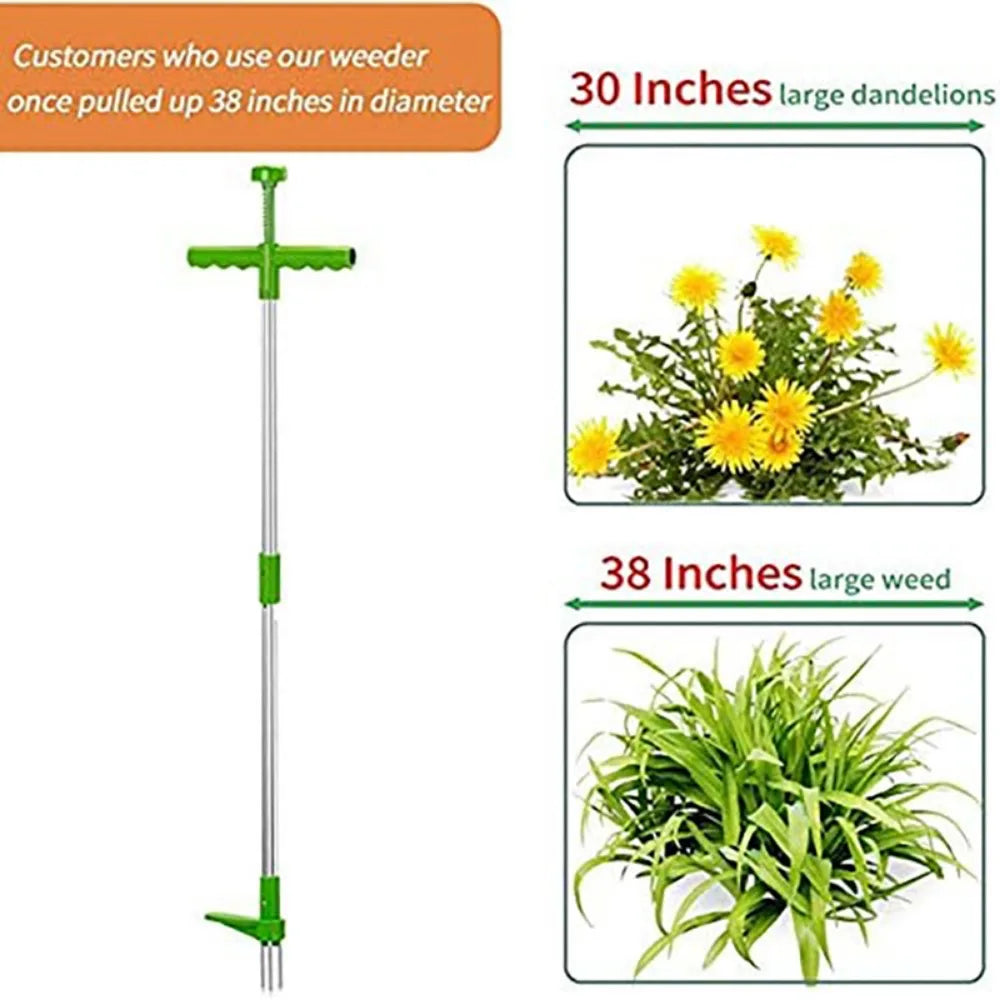
Snap the top off a dandelion and you leave the taproot in the soil. It's back in four days. StepSpike drives three stainless claws under the crown, twists the whole root system loose, and spits it out — while you stay standing.
- Free
shipping - 30-day
field trial - Dispatch
in 24h
The taproot
is the whole fight.
A trowel, a glove, a spray bottle — they all attack the part you can see. The part that matters is the taproot, four to six inches down, storing enough energy to rebuild the whole plant by the weekend.
StepSpike's three claws enter on a converging angle and close beneath the crown. One quarter-turn shears the soil grip. One tilt on the foot fin levers the root out whole. Nothing left behind to regrow from.
Four moves.
Then the next one.
The sequence is fixed and takes about six seconds once your hands learn it. Order matters — skip the twist and the root snaps.
- Step 01Bite
Center the claws on the crown and step down on the fin.
- Step 02Twist
A quarter-turn on the T-bar shears the soil's grip on the root.
- Step 03Lift
Tilt back. Your bodyweight on the fin does the pulling, not your spine.
- Step 04Eject
Push the knob. The spring fires the weed out. Your hands never touch it.
Four things
a trowel can't do.
- 01 / Full-depth captureIt takes the root, not the leaves
Three converging stainless claws close below the crown and lift the taproot out in one piece. No stub left to regrow from.
- 02 / Spring ejectorYou never touch the weed
Press the top knob and the plunger fires the root and soil clod straight off the claws. No gloves, no stooping to unhook it.
- 03 / Telescoping shaftBuilt to your spine, not the average one
Pin-lock collar plus modular pole sections. Set it at your standing height and the tool comes to the weed — you don't go down to it.
- 04 / Foot-fin leverageYour bodyweight replaces your back
The cantilevered fin is a fulcrum. Step, tilt, done. Compacted clay and gravel edges included.
No spray.
No stains.
No kneeling.
Chemical weedkillers need dry weather, a waiting period, and a lawn nobody walks on — no pets, no kids, no bare feet. StepSpike needs one step and a twist. The weed is gone the second it leaves the ground and the patch is safe to walk on immediately.
- Dandelions, plantain, thistle, dock
- Crabgrass clumps and clover patches
- Lawn, borders, gravel joints, path edges
- Anything with one dominant taproot
- Woody stumps, saplings, shrub roots
- Prying rocks or levering paving slabs
- Bone-dry, brick-hard soil (see below)
- Weeds wedged tight against a wall
Water the patch and wait a minute. Wet soil releases the root whole; dry, compacted soil snaps it and leaves the taproot behind. This is true of every stand-up weeder ever made, and it's the single reason people think theirs "doesn't work."
The noise a root makes
when it lets go.
Turn the sound on. That soft tear is the taproot leaving the soil in one piece — not the snap of a stem breaking at ground level. Once you've heard the difference you'll know instantly whether you got the whole thing.
Ask the awkward
questions first.
The load path is metal. Claws are stainless, the shaft is steel tube, the ejector runs on a coil spring — the plastic housing holds those parts in alignment, it doesn't carry the pull. What breaks foot pedals on tools like this is using them as a crowbar on tree roots and paving stones. Use it on weeds and it outlasts the lawn. If it fails inside 30 days we replace it, no photos, no argument.
No — that's the entire point of the spring plunger. Lift the tool, hold it over your bucket, press the knob with your palm, and the clod fires off the claws. If a wet clay clod ever sticks, tilt the head 45° and press again; the angle breaks the suction instantly.
It leaves a plug hole roughly the width of a golf ball. Press it closed with your heel as you move on and it's invisible in a day or two — same principle as core aeration. Pulling out of dry soil makes the hole look worse, which is the other reason for the 60-second watering rule.
About five weeds. The mistake everyone makes first time is pulling straight up without the quarter-turn twist — that shears the root and leaves the taproot behind. Bite, twist, then tilt. By the sixth weed your hands do it without thinking.
Yes. The shaft telescopes and ships with additional pole sections, so you set the working height to your own frame instead of accepting one fixed length. That's the specific complaint people have about fixed-handle weeders, and it's designed out here.
Twist the pole sections together, seat the pin lock, done — under three minutes with no tools beyond the included hardware. Orders leave the warehouse within 24 hours, shipping is free, and tracking hits your inbox the moment the label is scanned.
Use it on your actual lawn for 30 days — not in a box, in the dirt. If it doesn't get roots out standing up, tell us and we refund you. Weeding is the one purchase you can test honestly in an afternoon.
2,614 lawns.
No kneeling.
30 days.
Your lawn.
Your verdict.
Pull weeds standing up for a month. If your back, your knees, or your borders disagree with anything on this page, we refund you and you keep the 60-second rule for free.
Root removal, not weed removal.